A bathroom takes up a small share of a home's floor area and a large share of its renovation budget. It also carries the highest cost of failure: a poorly finished living room is an eyesore, but a poorly waterproofed bathroom becomes a leak in the neighbour's ceiling.
Why the visible part is the smaller part
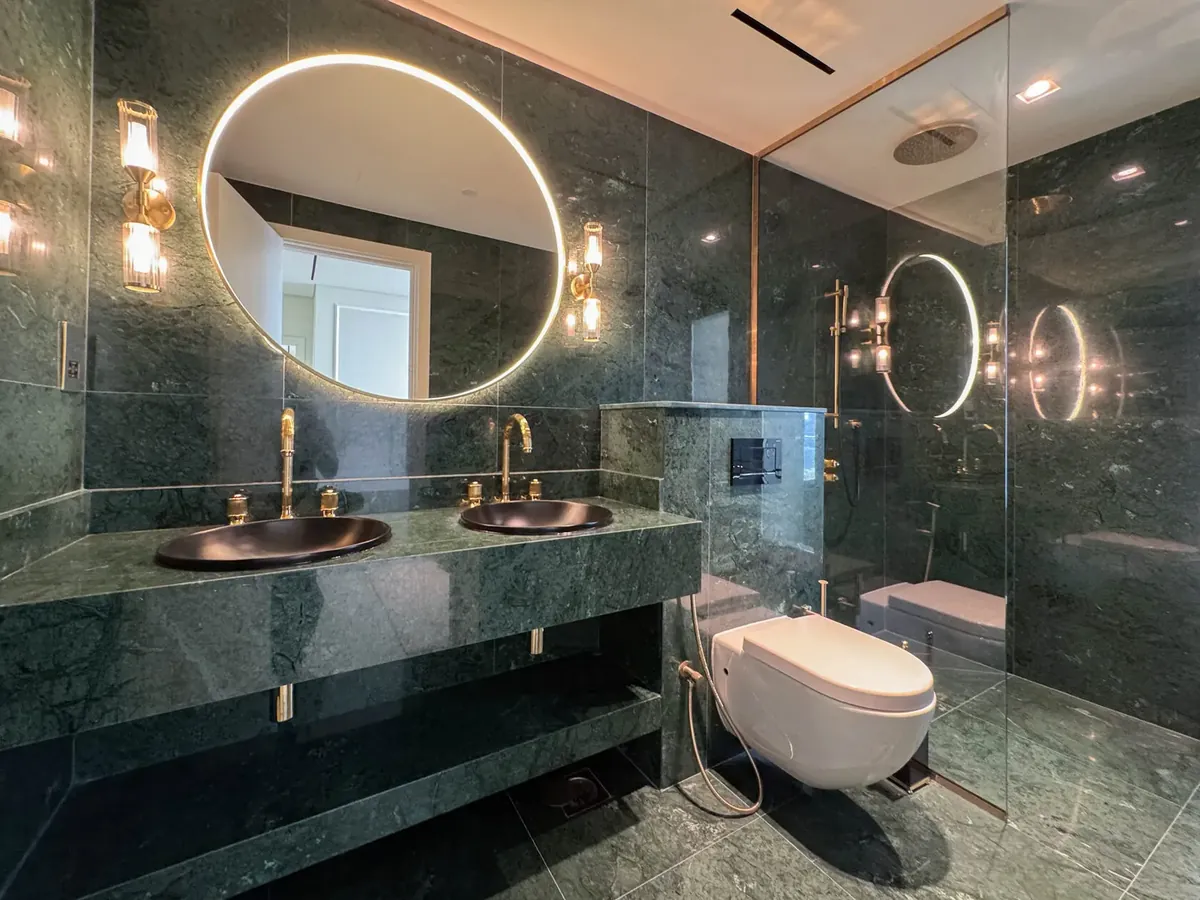
When an owner imagines a bathroom renovation, they picture stone, brassware, glass and lighting. Those are the items photographed and the items chosen from samples. They are also the last items installed.
Before any of them goes in, a bathroom renovation involves strip-out to the structural slab, rerouting or replacing drainage and supply pipework, correcting falls so water runs to the drain, a waterproofing membrane, a protection screed, and a period of testing. This hidden work decides whether the finished bathroom lasts three years or thirty.
Waterproofing: the step that cannot be repeated cheaply
Waterproofing is applied to the floor and typically up the walls in wet zones, before tile or stone. Done properly it is a continuous membrane, turned up at the edges, sealed around every pipe penetration and drain, and left to cure as the manufacturer specifies.
Most failures come from a short list of causes:
- Gaps at penetrations. Pipes, drains and fixings are where continuous membranes are most often broken.
- Insufficient turn-up at the walls. Water finds the junction between floor and wall first.
- Skipped or rushed testing. A flood test, where the area is filled and left, usually for 24 to 48 hours, is the only way to know the membrane works before it is buried under stone.
- Damage after application. A membrane that is walked on, dragged across or drilled through before it is protected is no longer a membrane.
Ask for the flood test to be done with you, or documented with photographs and a date. If a contractor treats it as optional, treat that as information about the rest of the job.
A sensible sequence
- Strip out to the slab and inspect the existing waterproofing and pipework.
- Complete plumbing and drainage changes, and pressure-test the supply lines.
- Form the falls, apply waterproofing, protect it, and flood test.
- Install tile or stone, then grout and seal.
- Fit sanitaryware, glass, brassware, lighting and mirrors last.
Compressing this sequence to save a week is rarely a saving. It tends to move cost to the end of the project, when it appears as rework.
Approvals and the building
Works that change plumbing, drainage or anything touching the structure usually need approval from the building's management or the community developer, and in some cases the relevant authority. Lift protection, working hours and waste removal rules also apply. These are covered in more detail in the guide to Dubai renovation approvals. A bathroom works plan that ignores them is a plan that gets stopped halfway.
Where to spend and where to save
Spend on waterproofing quality, the substrate beneath the stone, and ventilation. Poor extraction produces mould, which no finish hides.
Spend selectively on the elements touched daily: the shower mixer, the shower glass hardware, and the tile that sits at hand height.
Save on items that can be upgraded later without breaking anything: accessories, mirrors and, within reason, lighting fittings.
Natural stone and feature walls in wet areas
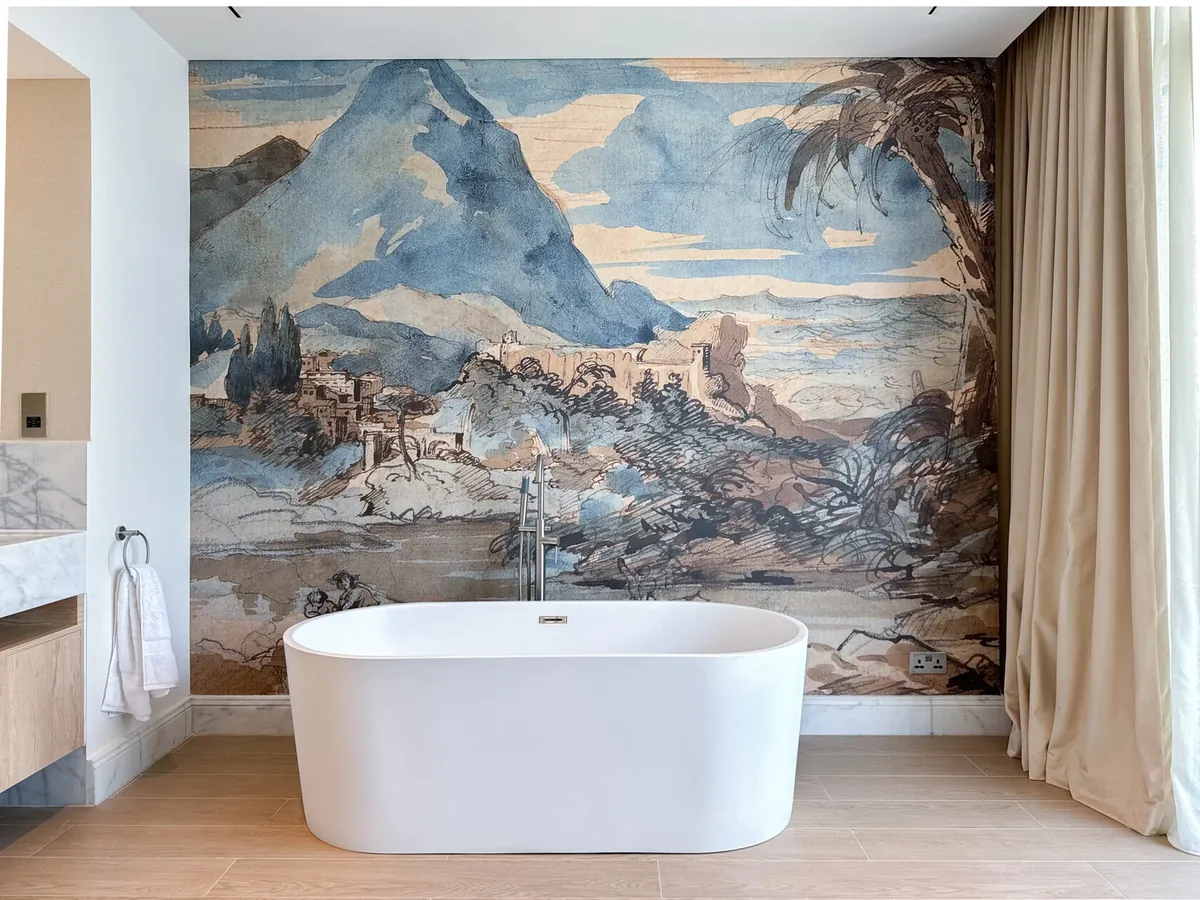
Natural stone is beautiful and variable. It also needs sealing, can stain, and behaves differently from porcelain. If you choose it, ask which sealer is used, how often it needs reapplying, and whether the slabs have been inspected as a batch so the veining matches. Murals and wallpapers in wet areas need a moisture-rated product and a protective finish; a decorative wall that peels after one summer is a specification failure, not bad luck.
For a broader view of which finishes last in local conditions, read materials that survive the Dubai climate.
Budget realistically
Two things catch owners out. First, hidden conditions: old pipework or failed waterproofing discovered at strip-out. Keep a contingency for this. Second, specification drift: a bathroom that begins with mid-range sanitaryware and ends with a designer basin because the showroom visit went well. A fixed, itemised quotation reduces both; how to read a contractor quotation explains what to look for.