Kitchens are expensive because they combine four trades in one small room: joinery, stone, appliances and building services. Owners who treat the kitchen as a single purchase tend to overspend on one part and be disappointed by another.
Start with the layout, not the finish
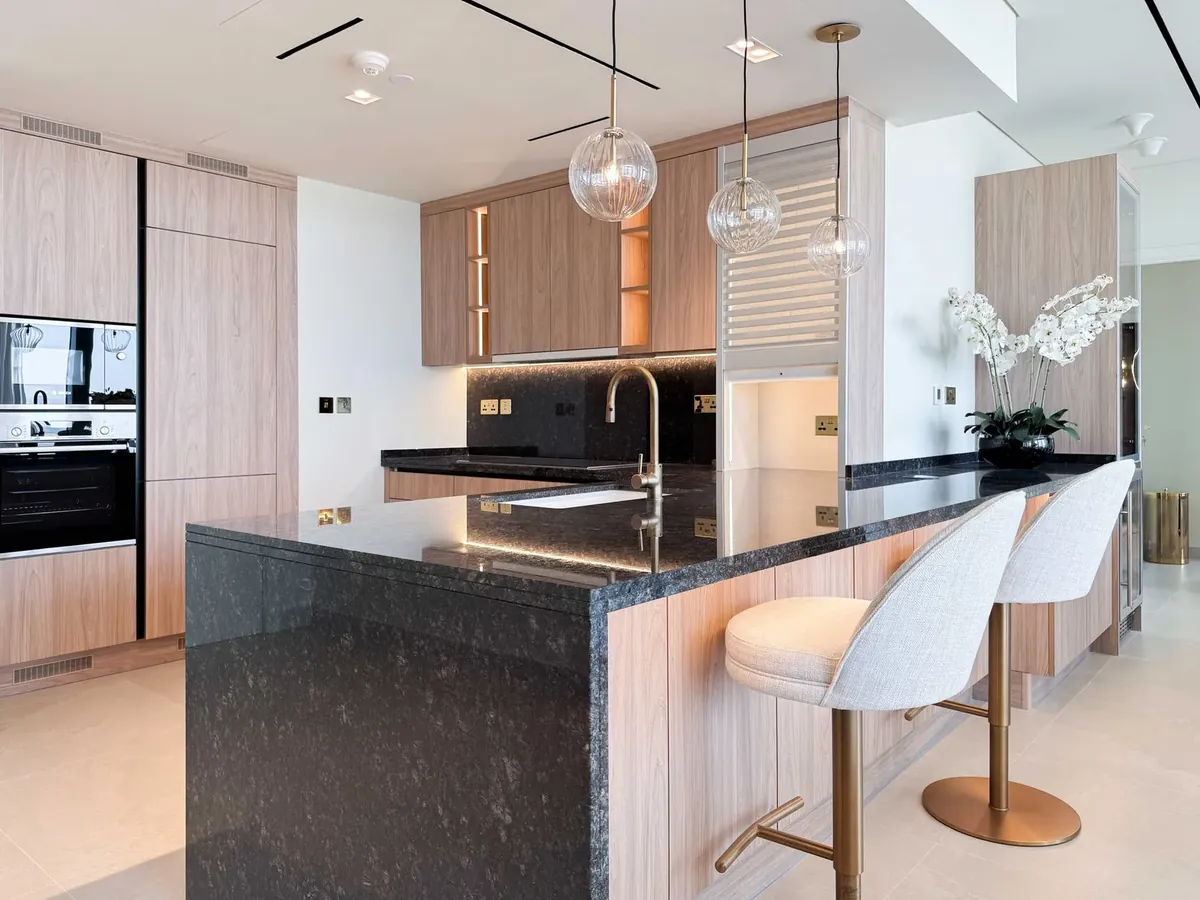
The most valuable decision in a kitchen is where things go. The working triangle between hob, sink and refrigerator, the position of the oven relative to the landing space beside it, and how doors open into each other all affect daily use far more than the colour of the cabinet fronts.
If a layout needs the plumbing or extraction moved, that is a cost with a ripple effect through the ceiling and floor. In many apartments the services are fixed by the building, so a layout that works with them is cheaper and quicker than one that fights them. Establish what can move before you fall in love with a plan.
The worktop: spend here
Worktops take heat, moisture, knocks and cleaning products every day. The main options behave very differently:
- Engineered quartz is consistent and low maintenance, but can be damaged by direct heat from pans.
- Sintered stone and porcelain slabs are very hard and heat-tolerant, but need skilled fabrication and edges can chip.
- Natural granite and marble are distinctive. Marble stains and etches with acids; granite is far more forgiving.
Whichever you choose, check how joints are positioned, whether the slab layout is shown before cutting, and whether the sink cut-out is supported properly. A good stone supplier will provide a template drawing for approval.
Joinery: quality is in the parts you cannot see
Door fronts are what everyone looks at. Carcass material, hinge quality, drawer runners and moisture protection at the base are what decide whether the kitchen still works in eight years. In Dubai's humidity, edge sealing and moisture-resistant carcass boards matter more than they would in a dry climate.
Custom joinery usually costs more than modular units but fits awkward dimensions without filler panels. The trade-off is explained further in custom joinery versus ready-made furniture.
Appliances: decide early
Appliance dimensions drive the joinery drawings, so they must be chosen before the cabinets are manufactured. Changing a built-in oven after the carcasses are cut means rework. Choose models, confirm the exact cut-out sizes and ventilation requirements, and record the decision in the quotation.
Extraction and lighting
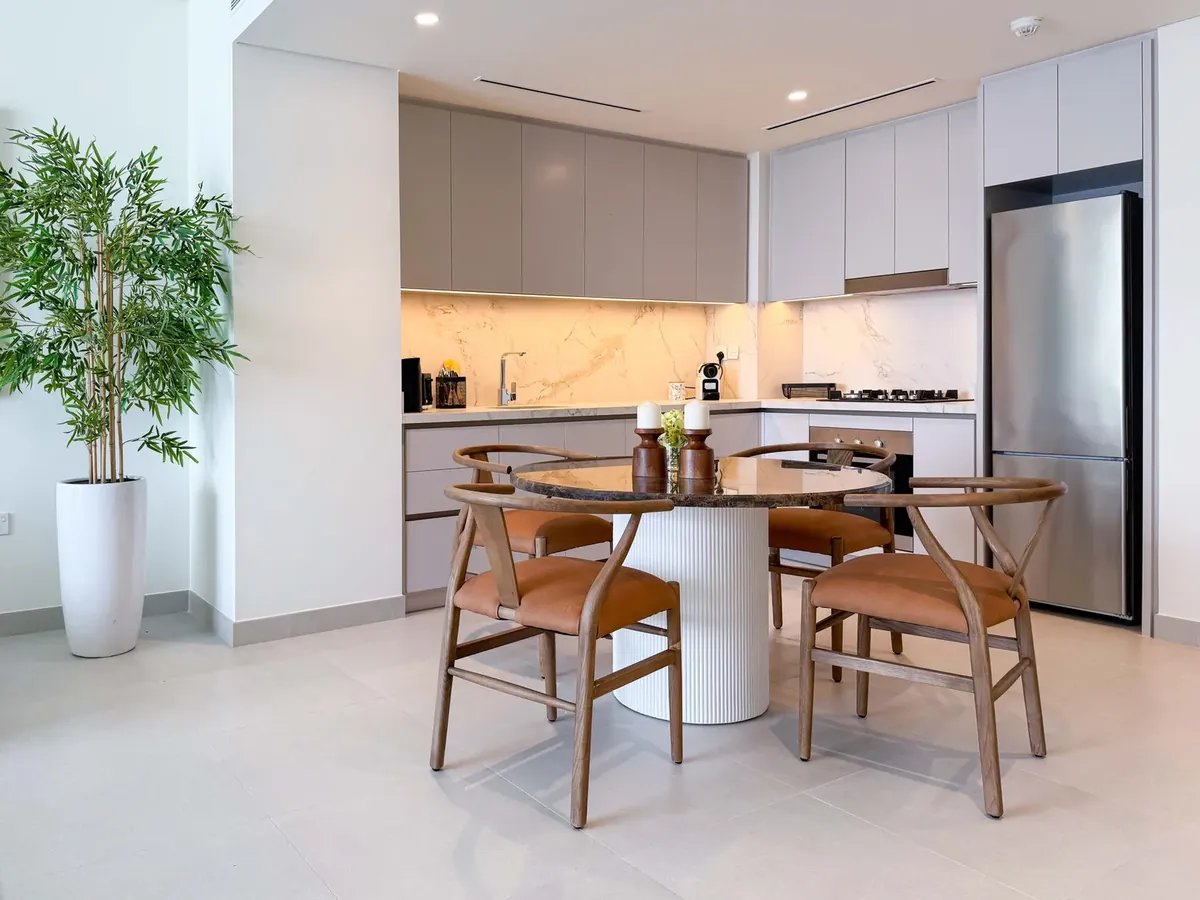
Good extraction is an unglamorous essential. A hood that does not vent properly leaves grease on every surface and smell in the rest of the home. Check that the duct route is possible before specifying a design that depends on it.
Lighting should be layered: general light, task light under wall units, and a decorative layer over islands. Task lighting is cheap to include during the build and expensive to add later. The same principle applies throughout the home, as discussed in lighting layers for a Dubai apartment.
What is easy to over-specify
- Imported handles and taps beyond what daily use justifies.
- Large-format backsplashes in a rental or resale unit, where a simpler surface reads equally well.
- Appliance suites sized for a professional kitchen in a home where the oven is used twice a week.
If you are renovating to sell, remember that buyers respond to a clean, well-lit, well-proportioned kitchen rather than to brand names. The economics are covered in what pays back when renovating for resale.