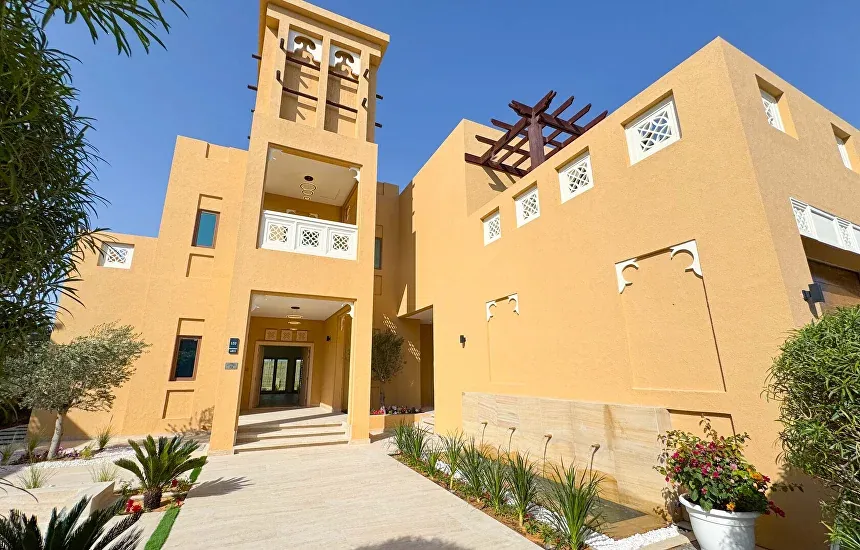
Many Dubai villa communities are built in a traditional Arabian style: sand-toned render, wind-tower motifs, carved screens, arched openings and inner courtyards. These features give a property its identity and, in many communities, are protected by design guidelines. Renovating such a villa means working with that character, not against it.
Know the rules first
Communities of this kind usually have strict external guidelines covering colours, materials, openings, extensions and boundary walls. Approval from the community or master developer is typically required before external work begins, and some works also need municipal or authority sign-off. Start with the community's guidelines and the process in the approvals guide. Applying late is how projects stall.
Facade and render
The render and paint on an exterior wall take the full force of sun, dust and occasional heavy rain. Typical problems include hairline cracking, fading, efflorescence (white salt deposits), and paint failure where moisture has entered behind it.
- Diagnose before painting. If a wall is damp or cracked, repainting only hides the symptom. Find the source: a failed sealant, a leaking pipe, poor drainage at the base.
- Match the colour carefully. A patch of slightly wrong sand tone shows from the street. Test on a small, hidden area and view it at different times of day.
- Use breathable, weather-resistant systems suitable for the substrate, applied to the manufacturer's method.
Screens, arches and timber
Carved screens and mashrabiya-style elements filter light and provide privacy. Over time, timber elements such as pergolas and shutters suffer in strong sun and temperature swings. Specify treated timber, UV-resistant finishes and stainless or coated fixings, and plan for periodic recoating. Replacing a decorative element with a visually similar but cheaper material rarely survives close inspection or community approval.
For guidance on materials that suit the local climate, read materials that survive the Dubai climate.
Courtyards, windows and glazing
Courtyards were historically a cooling device: shaded, planted and often with water. Restoring that role pays off in comfort. Planting, shade and a small water feature make a courtyard usable for more of the year; related outdoor guidance is in villa outdoor renovation.
Replacing windows with more efficient glazing can reduce cooling load, but frames, proportions and glazing bars should respect the original style and what the community permits. Larger openings change how the facade reads and may not be approved.
Interiors can change more freely
Inside, the constraints are generally lighter. Many owners keep the traditional exterior and modernise the interior with open living areas, new kitchens and bathrooms, and contemporary lighting. This approach often gives the strongest result: a villa that fits its surroundings outside and suits modern life inside. The cost drivers for this kind of work are described in villa renovation: hidden cost drivers.
Plan the sequence
- Condition survey of structure, roof, services and facade.
- Community approval of external changes.
- Structural, waterproofing and services work.
- Facade repair and finishing, with scaffolding used once.
- Landscaping and external lighting last.
Doing external repairs after the interior is finished is a common and avoidable cause of damaged finishes and repeat work.