In a Dubai villa, the garden, pool and courtyard are often treated as an afterthought once the interior is finished. That is a mistake. They add usable living space, influence buyer and tenant interest, and are exposed to the harshest conditions on the property.
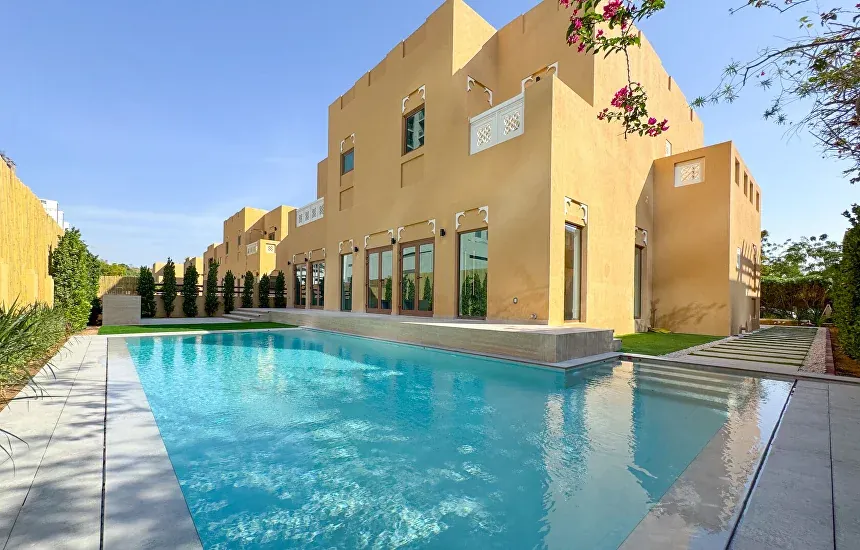
Plan around the climate, not the brochure
An outdoor design that looks good in a photograph on a spring morning has to work in July. That means thinking about shade first: pergolas, trees, sails and the building's own shadows determine whether a terrace is used at all between June and September.
Orientation matters. A west-facing seating area gets harsh afternoon sun; the same area, shaded and misted, becomes the best spot in the house at dusk. Observe how the sun moves across the plot before fixing the layout.
Pools: decide the equipment before the shape
A swimming pool is a piece of plant as much as a design feature. The main decisions are the pump and filtration system, whether to heat or chill the water, the finish of the interior, and where the equipment sits. Poorly placed plant causes noise next to bedrooms and awkward access for servicing.
Evaporation is significant in hot dry weather, so refill provisions, overflow design and automatic levelling matter. Safety requirements, including barriers and fencing for homes with children, should be confirmed before design is fixed.
Surfaces: choose for heat as well as looks
Stone and tile in direct sun can become uncomfortable to walk on barefoot. Lighter colours and certain textured finishes stay noticeably cooler than dark, polished surfaces. For pool surrounds, slip resistance is as important as appearance. Ask suppliers about the surface rating and request a sample left in the sun before committing.
Water features and planting
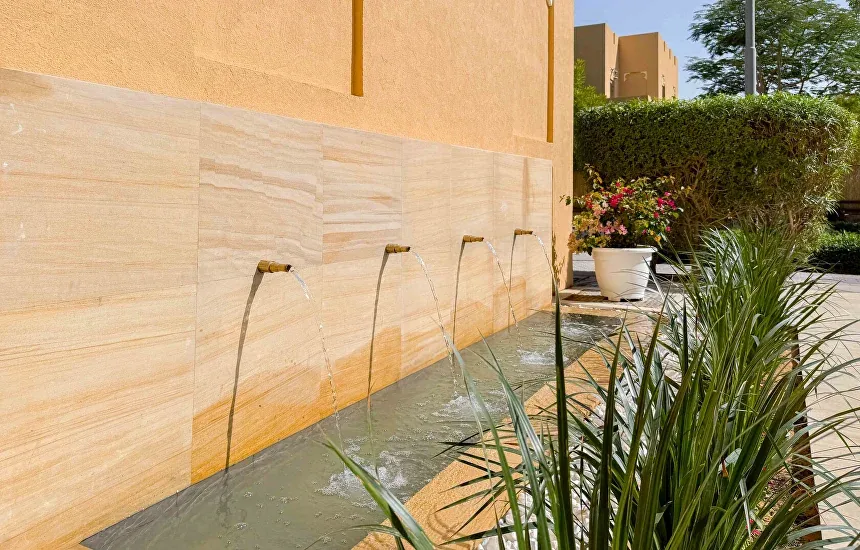
Water features provide cooling sound and a sense of calm, but they add equipment, evaporation and maintenance. A simple wall spout into a shallow channel, as shown below, is much easier to maintain than a large cascade.
For planting, choose species suited to local heat and the irrigation you will actually maintain. Drought-tolerant plants with a drip irrigation system and a timer are less work and use less water than a lawn. Where turf is wanted, keep it to a defined area rather than the whole plot.
Drainage and waterproofing
Outdoor floors need falls away from the building and sufficient drains for the rare heavy rainfall Dubai gets. Terraces over occupied space and planters against walls need waterproofing in the same way a bathroom does; the principles are described in bathroom renovation and waterproofing. Roots, irrigation and standing water will find any weakness.
Approvals and the community
Most villa communities have design guidelines covering extensions, boundary walls, pergolas, pool changes and external colours, and require approval from the community developer or master developer. Some works also need municipal or authority approval. Check the rules before design starts. Our approvals guide sets out the general process. Other hidden cost drivers for villas are covered in villa renovation: hidden cost drivers.
A sensible order of works
- Obtain approvals and confirm utilities and drainage routes.
- Excavation, pool structure and plant.
- Hard landscaping: paving, walls, water features.
- Electrical and lighting, irrigation lines.
- Planting last, to avoid damage during construction.